
Automotive & commercial vehicles
Pedestrian protection, tailgates, spoilers, pedal assemblies, door handles, folding seats and much more. ASOM calculates the force and torque requirements with springs, gas springs, friction and inertia.
Seat adjustment, furniture flap or aircraft landing gear: short videos show how ASOM and ASOMmini solve typical tasks and which forces and torques are involved.
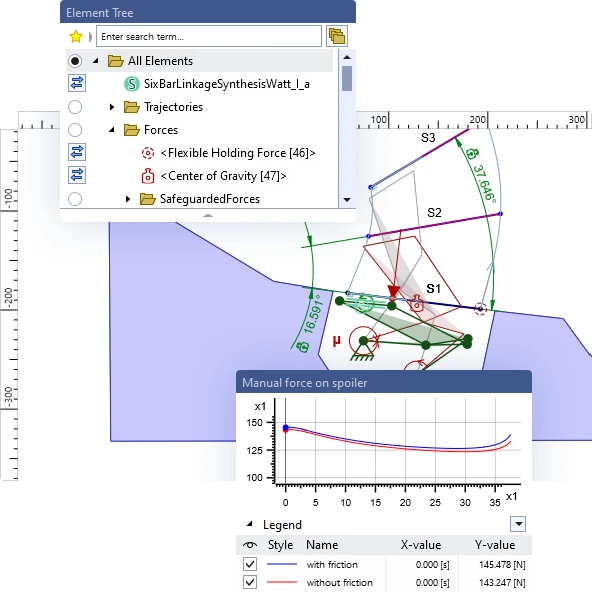

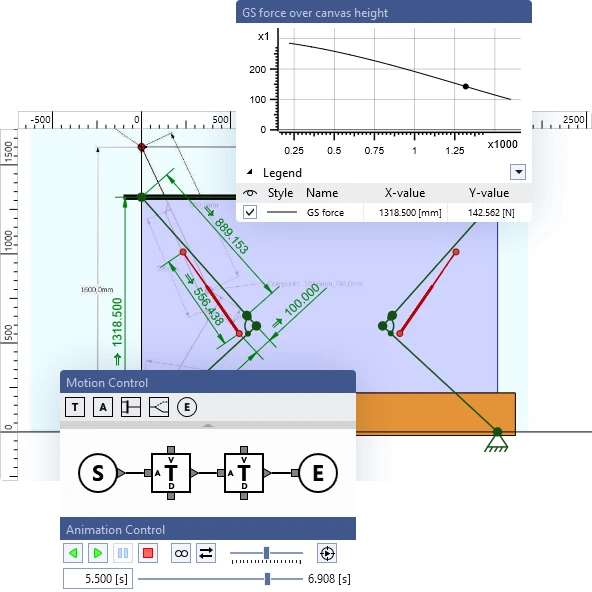
From vehicles, furniture and machines to care beds: with ASOM and ASOMmini, you design such motions and know the required forces and torques before the first prototype is built.
Pedestrian protection, tailgates, spoilers, pedal assemblies, door handles, folding seats and much more. ASOM calculates the force and torque requirements with springs, gas springs, friction and inertia.
Office chairs, cabinet doors, folding door systems, hinges, folding tables and much more. In ASOM and ASOMmini, you follow the manual force curve through the entire opening motion and immediately see the angle at which a flap starts to open by itself.
Pick-and-place units, grippers, hoists, excavator arms, pulley blocks, movable bridges and much more. In ASOM, you model gears, racks and belt transmissions as well as sliding and rolling contacts.
Care beds, wheelchairs, aircraft landing gear and overhead bins, umbrellas and much more. ASOM shows manual forces, drive forces and bearing forces over the entire motion, with joint friction if required.
Simplified models to try out.
The videos show real-world tasks and basics in just a few minutes. Filter by industry or product.
 2:10
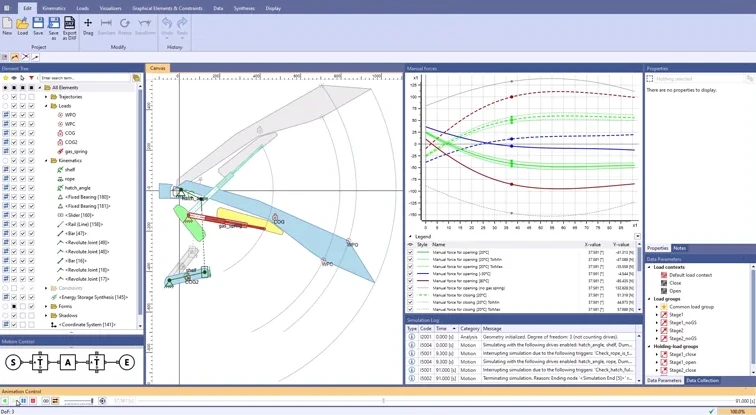
Two gas springs whose force depends on temperature and direction of motion, plus a parcel shelf on a cord. ASOM shows all manual forces for opening and closing in one diagram.
 2:11
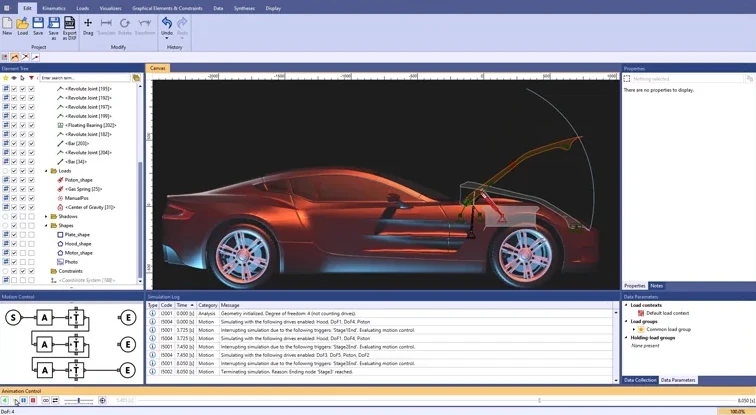
A hood mechanism for normal opening and for pedestrian protection: ASOM runs both sequences in one model, and you examine each section individually.
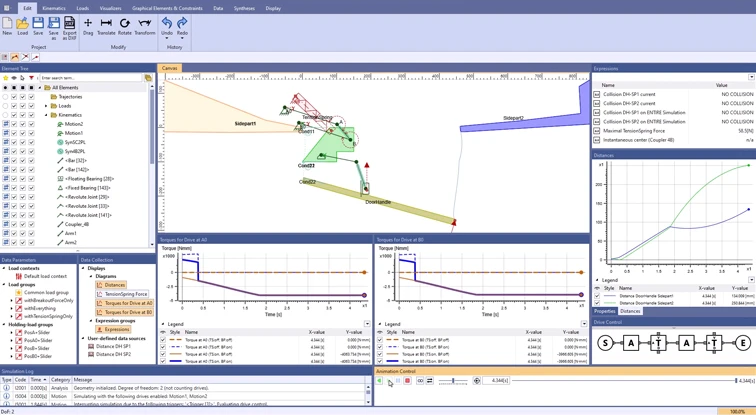 5:01
A retractable handle with three specified positions. Two syntheses hold them in place while you move bearings, and ASOM calculates eight drive cases at once.
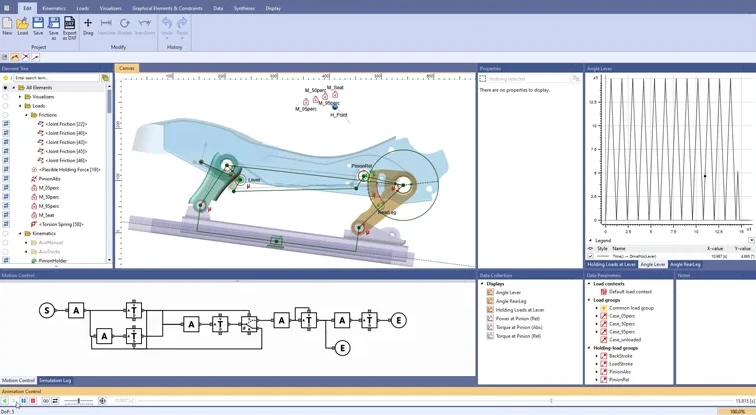 2:29
A hand lever adjusts the seat stroke by stroke. ASOM plays back the strokes automatically and shows the manual force for different seat occupancies in one diagram.
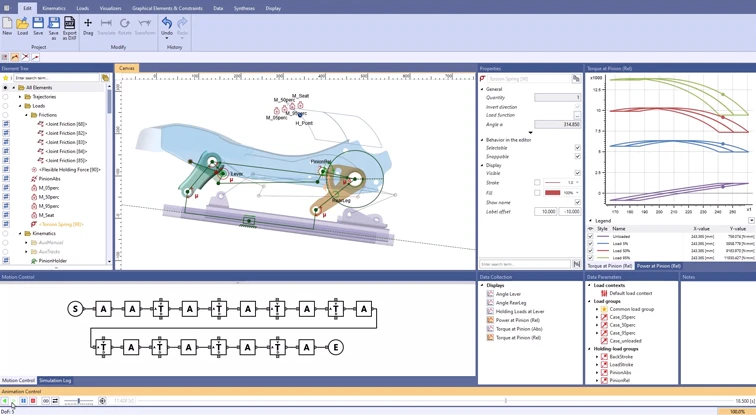 1:40
An electric motor moves the seat to all extreme positions. ASOM shows torque and power for different seat occupancies – and instantly reveals what difference a torsion spring makes.
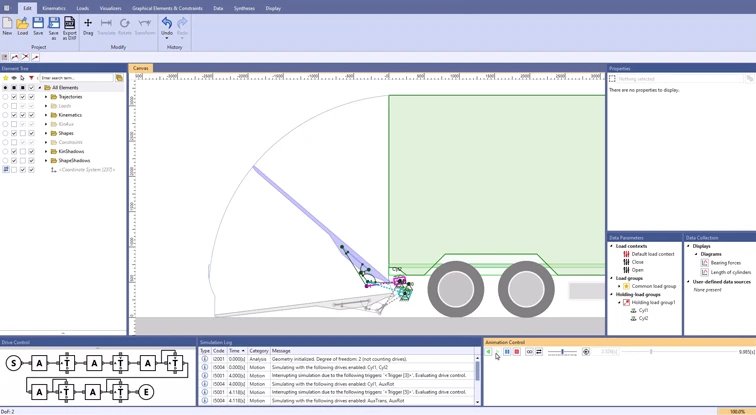 3:03
Two hydraulic cylinders open the gate and raise and lower the platform. ASOM combines the partial movements into one motion sequence and calculates the bearing forces with friction.
 4:43
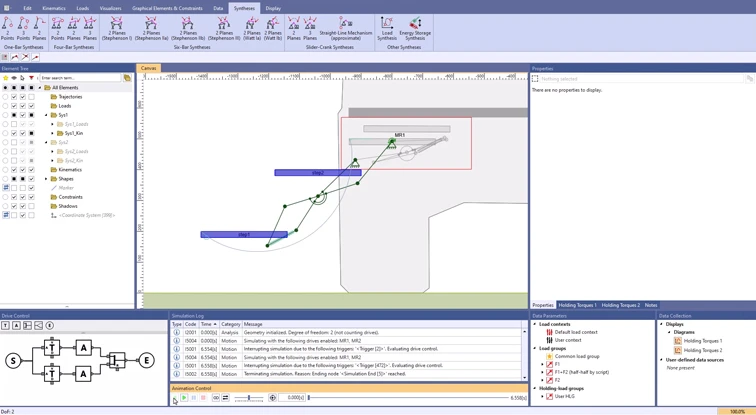
Two mechanisms for the same ladder: a scissor mechanism and a parallelogram linkage. ASOM designs both by synthesis and compares the required torques.
 3:43
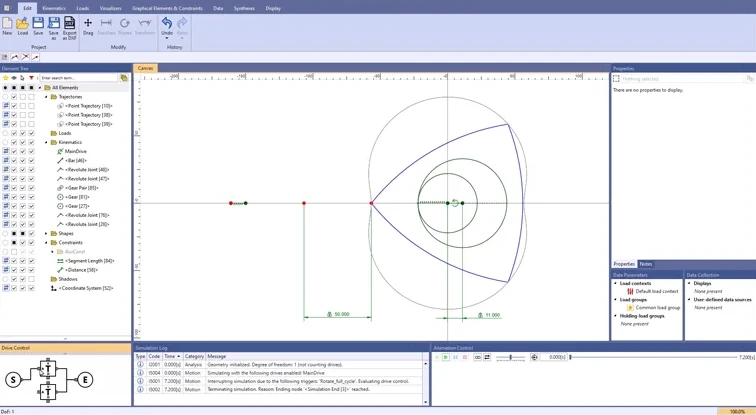
Constraints fix the gear ratio at 2 : 3. The trajectories of the rotor apexes form the housing contour – even when you change the rotor shape.
 1:15
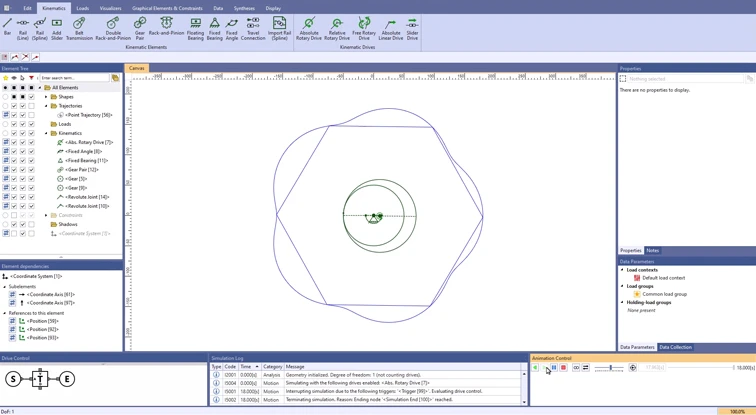
Rotors with three to six apexes compared, each with the matching gear ratio. ASOM shows the matching housing contour for each shape.
 1:32
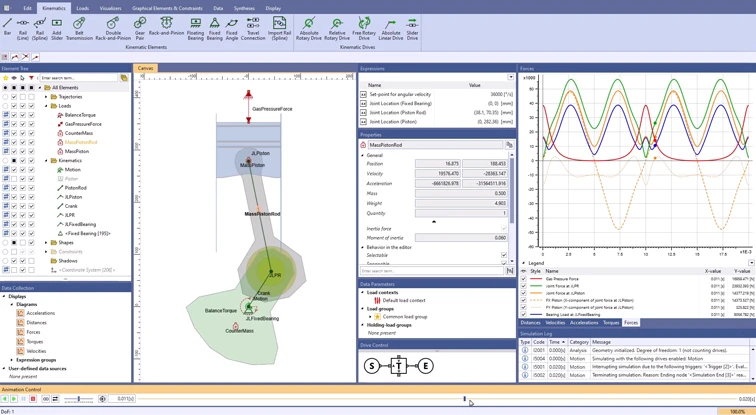
At 6,000 rpm, inertia matters. ASOM calculates the joint and bearing forces, including the inertia of the connecting rod, counterweight and piston.
 2:41
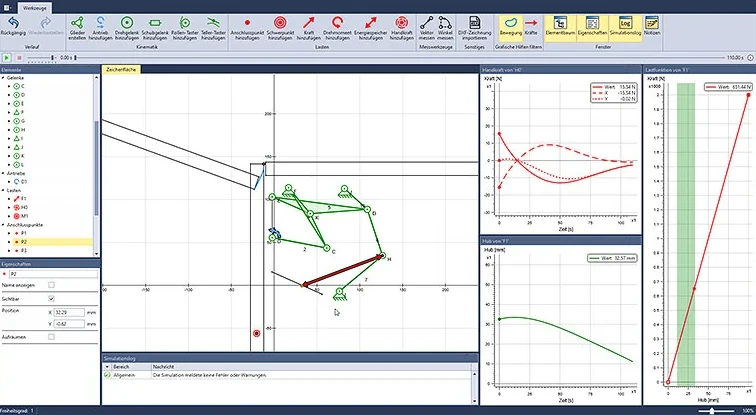
Set the tension springs on a six-bar hinge so that a 2–8 kg flap opens by itself from about 15–20°. ASOMmini shows the manual force curve, and you find the right attachment point in the model.
 2:26
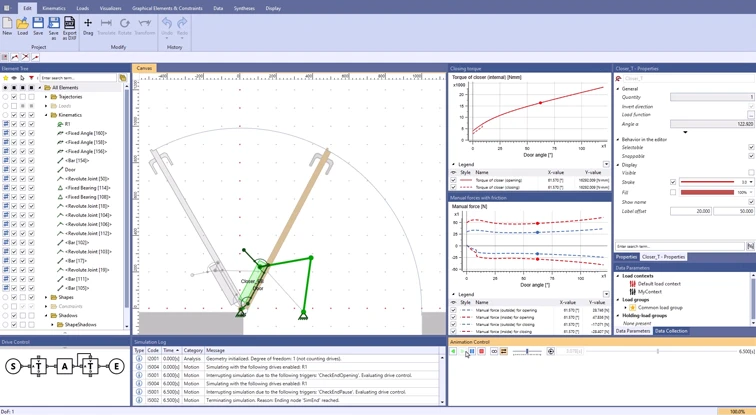
How much force is needed at the handle or directly at the door? You model the door closer’s behavior in simplified form, without reproducing its inner workings.
 3:05
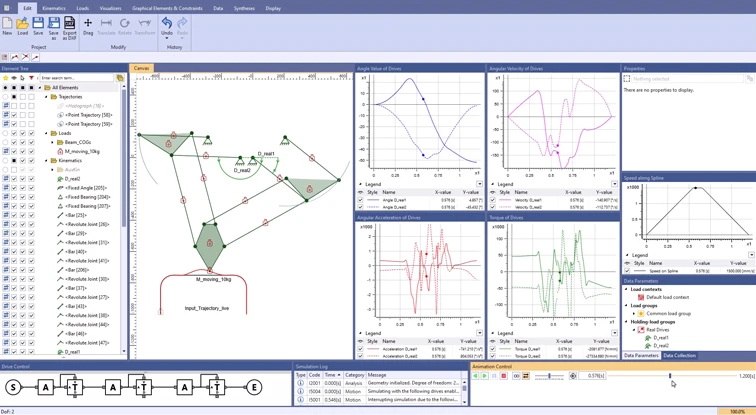
A parallel mechanism with two degrees of freedom: you specify the trajectory, and ASOM provides the angle, speed and torque of the drives, including inertia effects.
 0:42
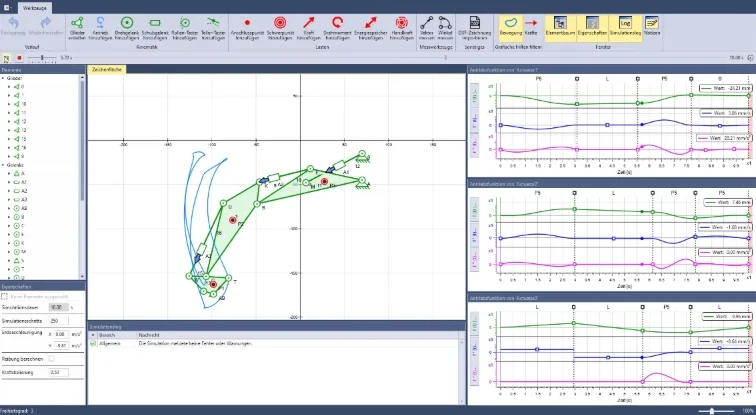
Three linear drives, one per degree of freedom, move the boom, stick and bucket. In ASOMmini, you coordinate their motion profiles and track the path of the bucket.
 3:08
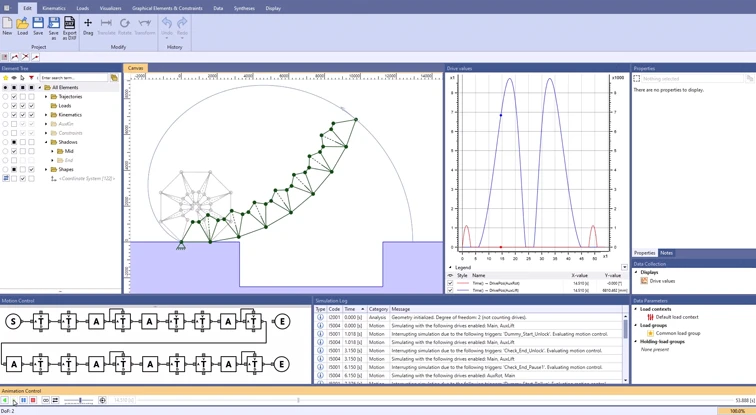
Element shadows show the motion at a glance, without replaying it. You assemble new movements from existing sections.
 3:13
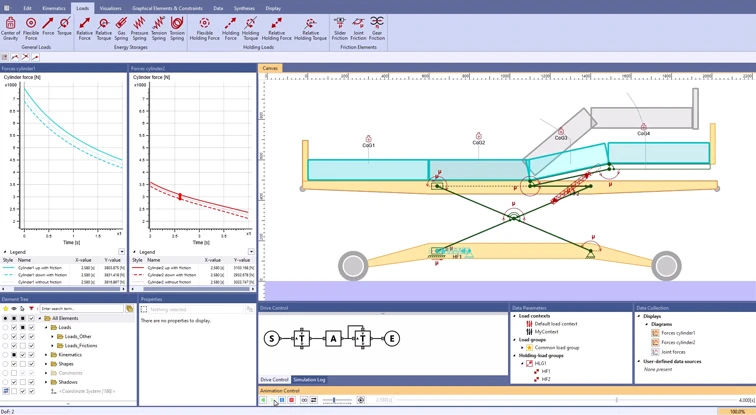
Two drives that model spindle drives adjust the height and the foot section. ASOM calculates drive and bearing forces in real time, with friction in all joints and guides.
 1:24
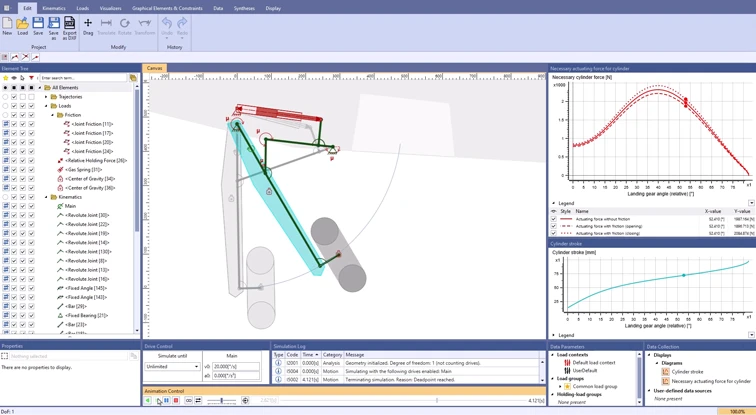
How much does joint friction change the cylinder force during extension and retraction? ASOM shows the force with and without friction in one diagram.
 3:57
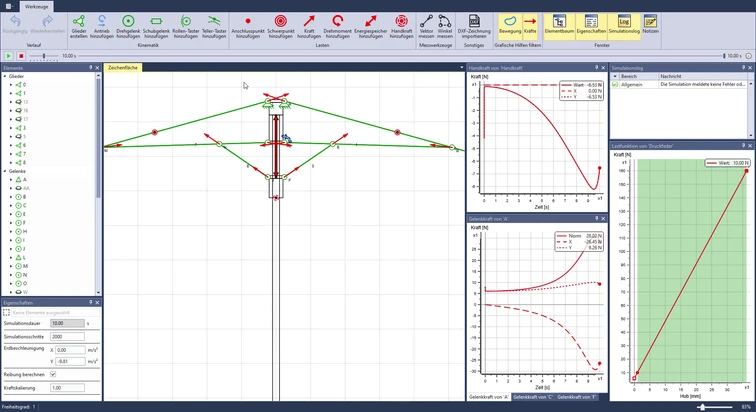
A pressure spring between the sliders opens the umbrella by itself. ASOMmini shows manual force and joint forces in real time, even as you change the spring characteristic curve.
 3:35
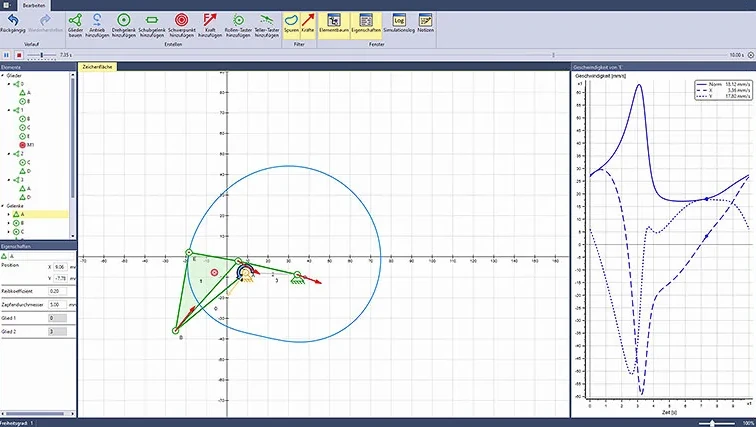
From a blank sheet to a rotatable four-bar linkage with bearing forces and friction – the whole process in ASOMmini.
 1:17
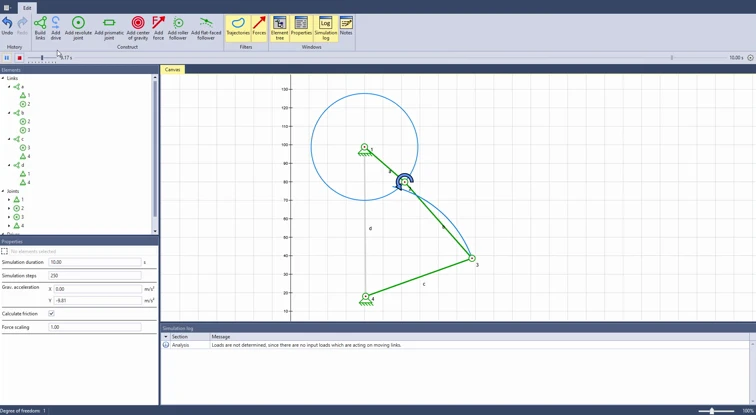
Four-bar linkage series, part 1: the crank turns fully while the rocker swings. The Grashof condition and the choice of frame tell you when this is the case.
 1:22
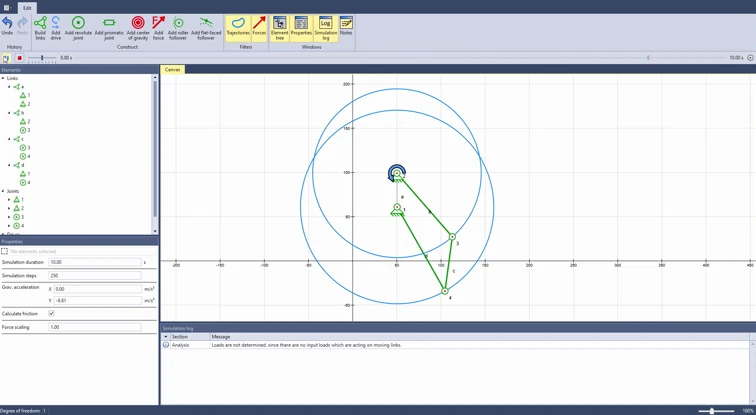
Four-bar linkage series, part 2: if the Grashof condition is met and the shortest link is the frame, both links pivoted on the frame turn fully.
 1:21
Four-bar linkage series, part 3: if the Grashof condition is met and the frame is opposite the shortest link, both rockers swing and only the coupler turns fully.
 1:01
Four-bar linkage series, part 4: links of equal length are opposite each other, as a parallelogram or crossed – a limit case of the Grashof condition.
 1:11
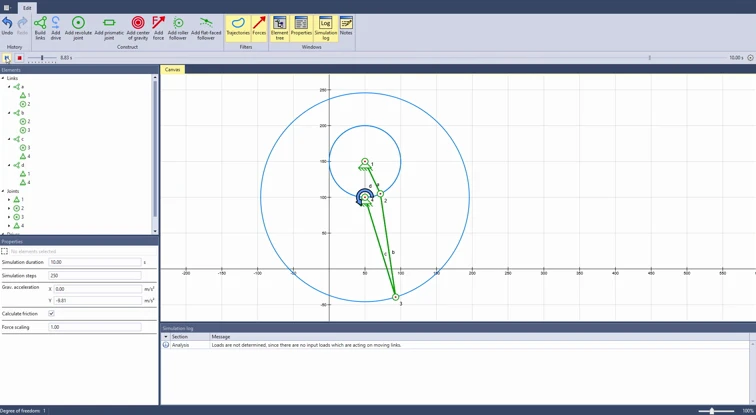
Four-bar linkage series, part 5: links of equal length are next to each other. Plus the rhombus linkage, in which all links are of equal length.
 2:39
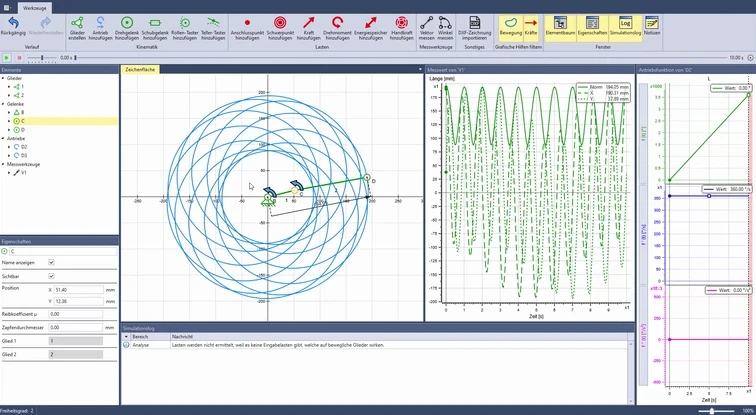
Two links, two rotary drives: change a link length or the angular velocity of a drive, and the trajectory and measured values follow immediately.
 2:29
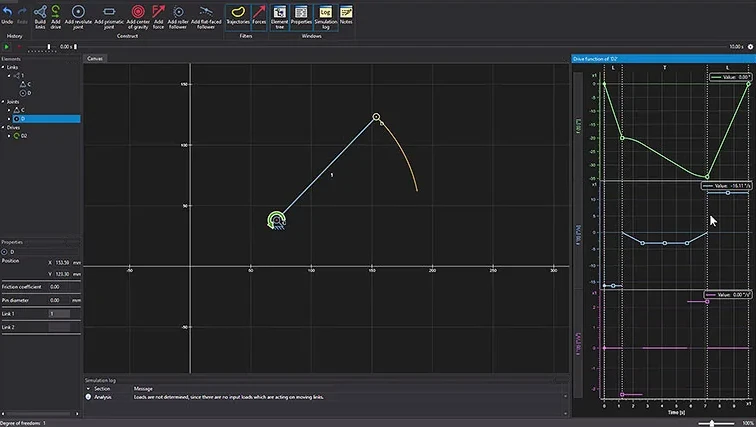
A rotating motion becomes an oscillating motion. You shape the motion profile directly in the diagram, segment by segment.
 1:56
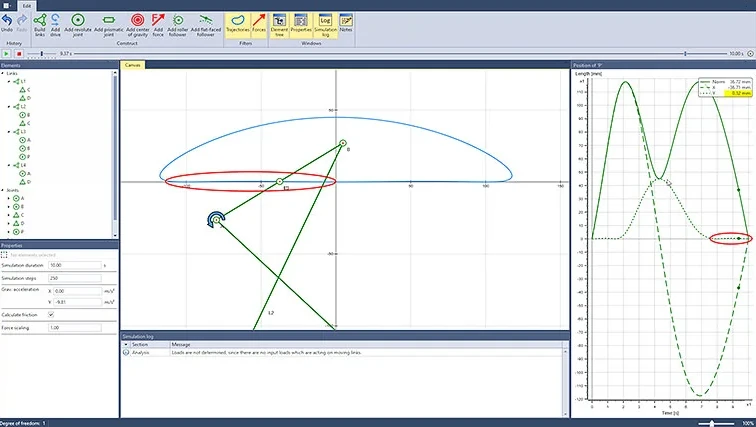
A Chebyshev four-bar linkage guides a point along an almost straight line. ASOMmini shows how straight: with a coupler length of 20 cm, the straight section lies within a corridor of about 1 mm.
 0:56
A roller follower couples a four-bar linkage and a one-bar linkage. The cam curve follows every change immediately and can be exported as a list of points.
 1:25
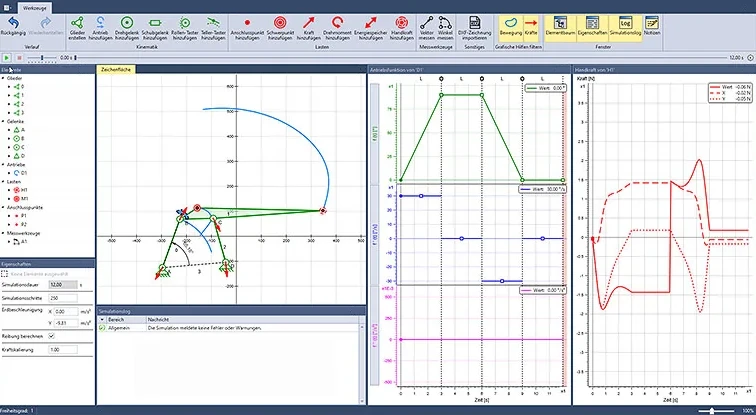
The manual force element shows in real time how the required manual force changes when you move the application point, a bearing or the center of gravity.
 2:31
Where should the hand apply force? ASOM shows the manual force for many application points at once in one diagram – even while you move the points.
 3:19
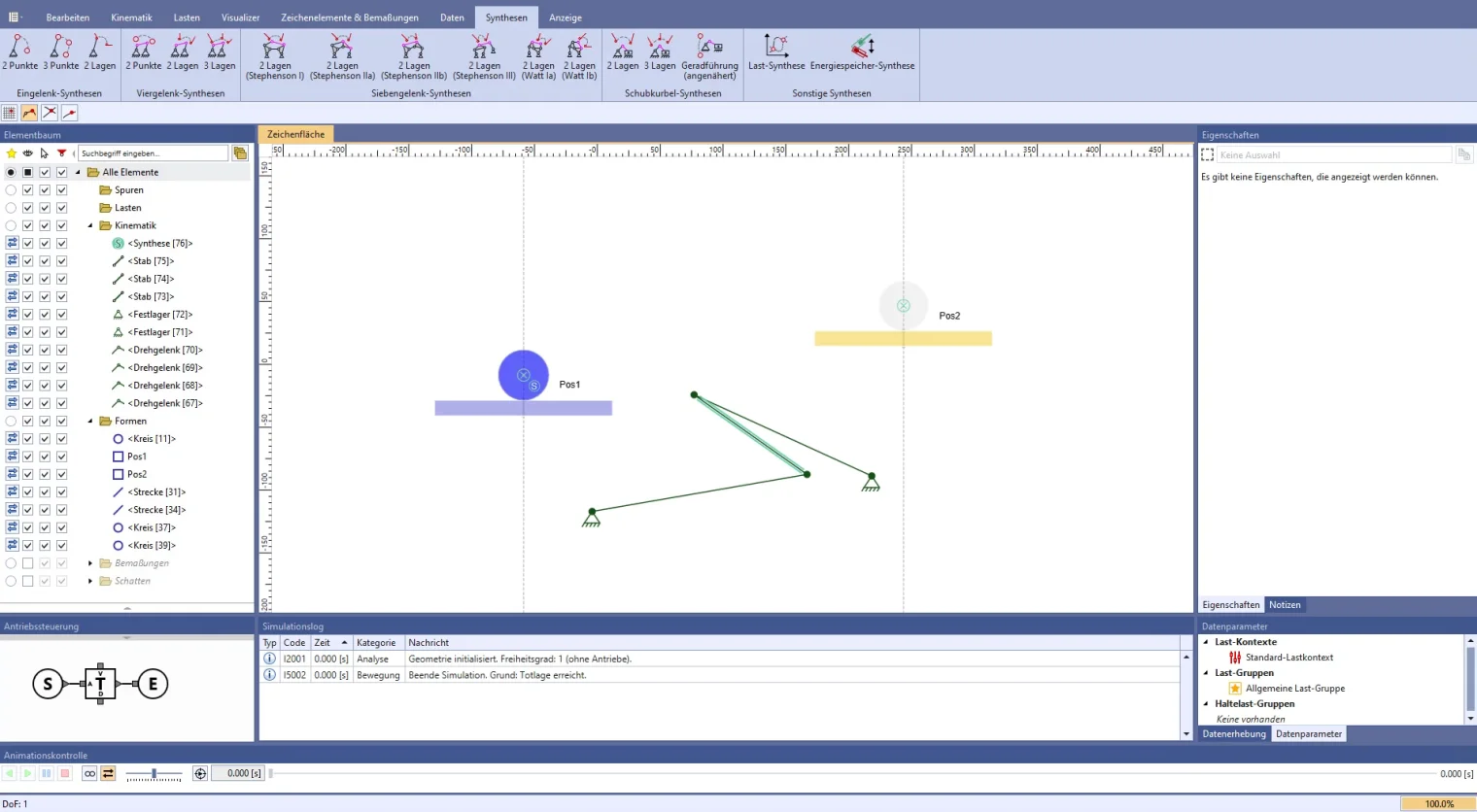
A four-bar linkage guides a ball from the start position to the end position. Move the end position, and the synthesis adapts the linkage in real time.
 3:35
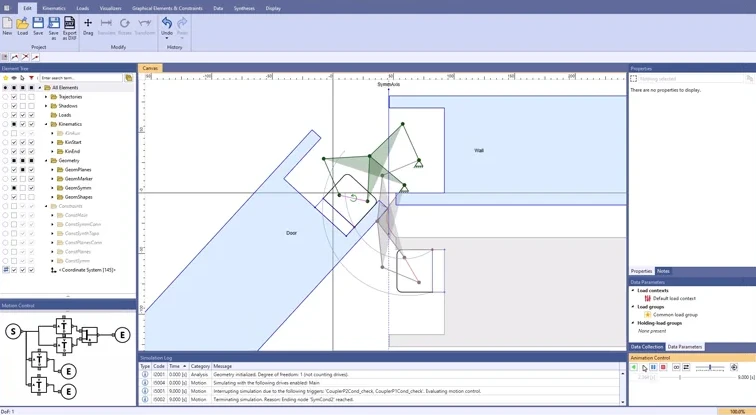
A six-bar linkage guides a door, with the joints arranged symmetrically. The synthesis is built from constraints alone, and the start and end positions remain adjustable.
 2:15
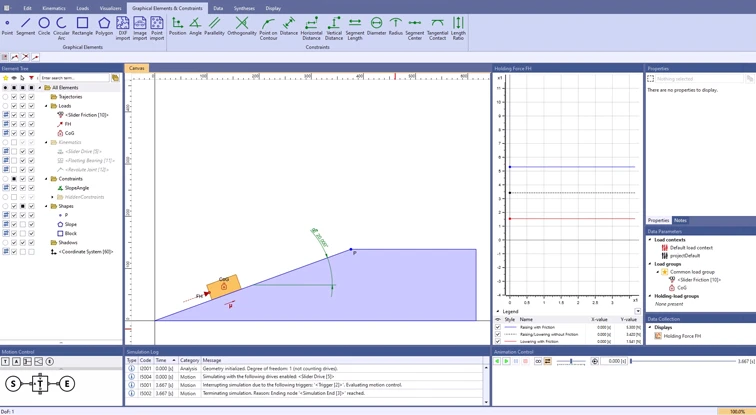
A block on an inclined plane: the holding force when raising and lowering, with and without friction. Using constraints, you quickly check many variants.
 4:18
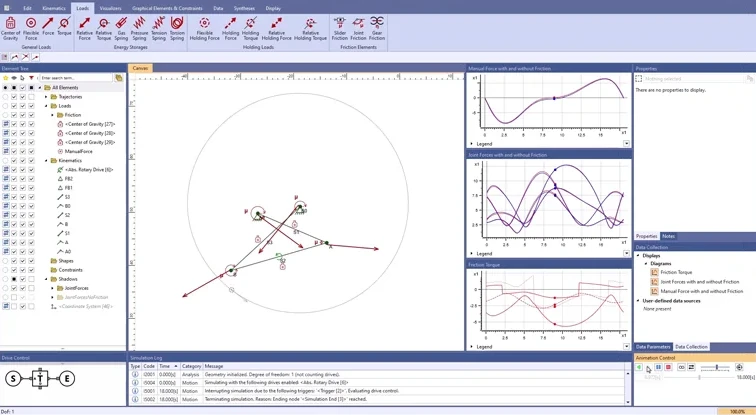
How much force is lost to friction? With a pin diameter and a friction coefficient for each joint, you compare manual and joint forces with and without friction.
 1:10
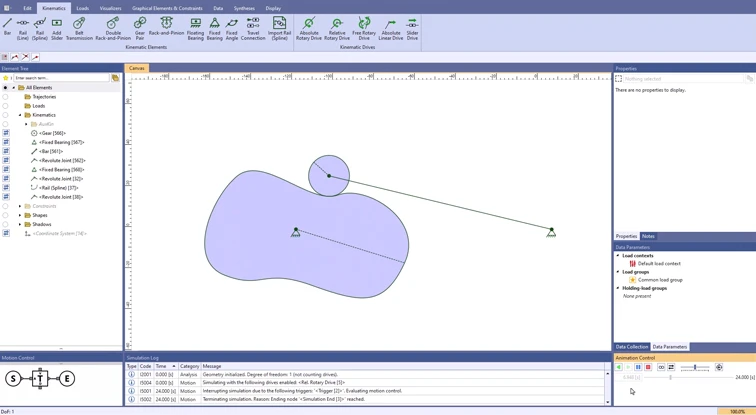
A circular shape slides on a contour of any shape or rolls along it. ASOM simulates both cases precisely, for example for curved guides.
 1:11
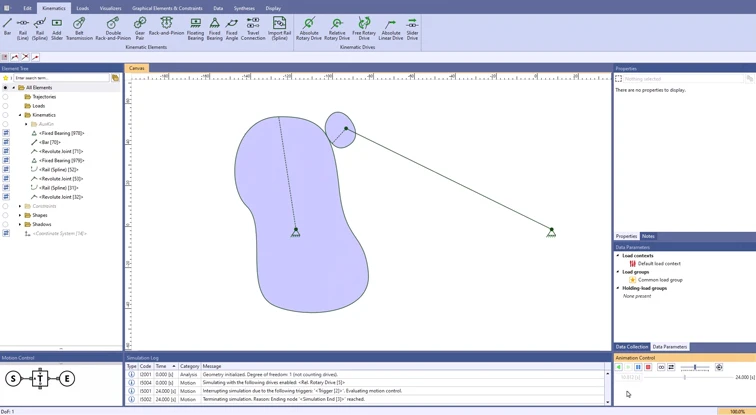
Two contours of any shape slide or roll precisely on each other. Unlike the circle example, the moving part is also freely shaped here.
There is no video for this selection yet. Ask us for an example from your field.
We would be happy to show you ASOM and ASOMmini in a no-obligation online meeting, using an example from your field.