
 0:42
Excavator arm
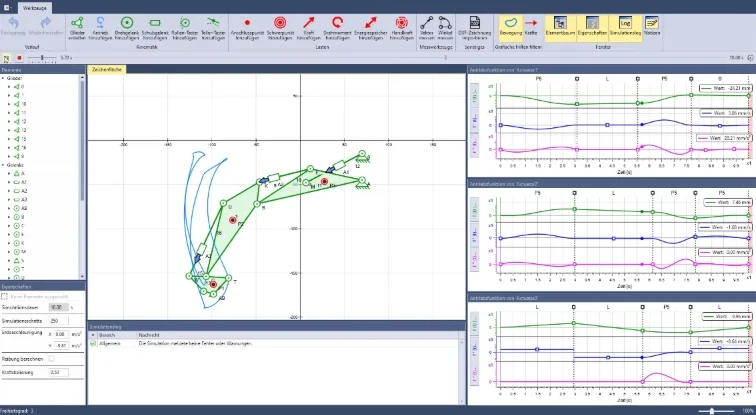
Three linear drives, one per degree of freedom, move the boom, stick and bucket. In ASOMmini, you coordinate their motion profiles and track the path of the bucket.
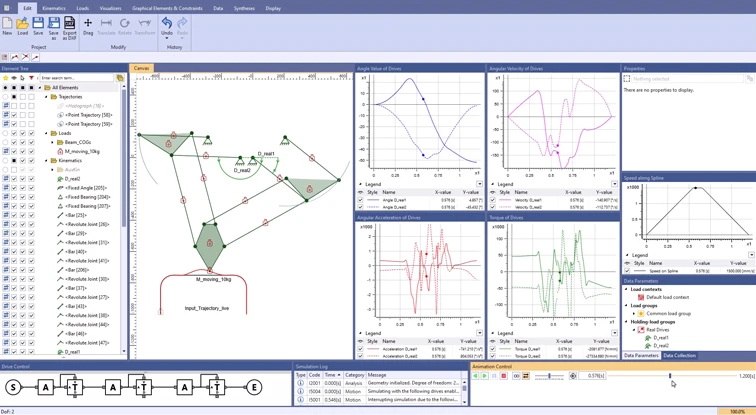
A parallel pick-and-place mechanism is to follow a specified path. From this, ASOM calculates the angle, speed and torque of both drives.
 3:05
The example examines a generic planar parallel pick-and-place mechanism with two degrees of freedom. The trajectory and the velocity profile with which it is traversed are specified. The task is to determine the motion of the actual drives, including the torque they require.
You change the trajectory or joint positions and immediately see which angles, speeds and torques the drives have to deliver.
Trajectory as input, drive values as output: in most cases, this is also how ASOM solves problems in inverse kinematics.
In the drive control, you define for yourself how the point accelerates, travels and decelerates. More on motion sequences
You try out new positions directly, and the model stays consistent. More on constraints
0:42
Three linear drives, one per degree of freedom, move the boom, stick and bucket. In ASOMmini, you coordinate their motion profiles and track the path of the bucket.
 3:03
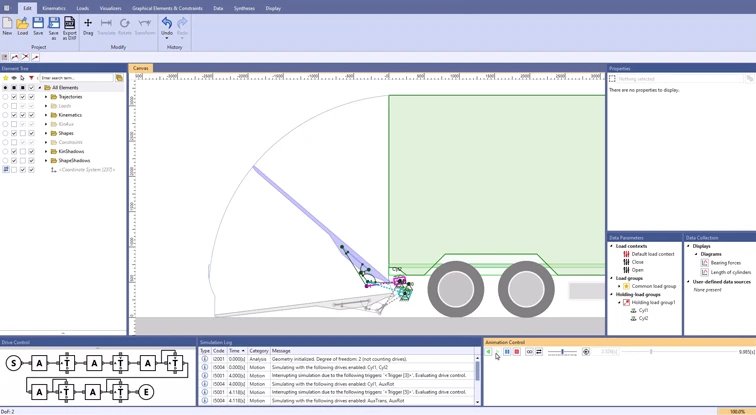
Two hydraulic cylinders open the gate and raise and lower the platform. ASOM combines the partial movements into one motion sequence and calculates the bearing forces with friction.
 1:32
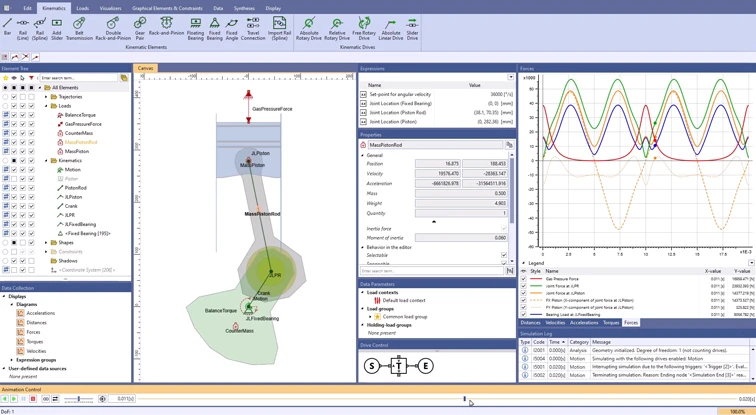
At 6,000 rpm, inertia matters. ASOM calculates the joint and bearing forces, including the inertia of the connecting rod, counterweight and piston.
Tell us about your mechanism. In an online demo, we will show you ASOM using your own example.