
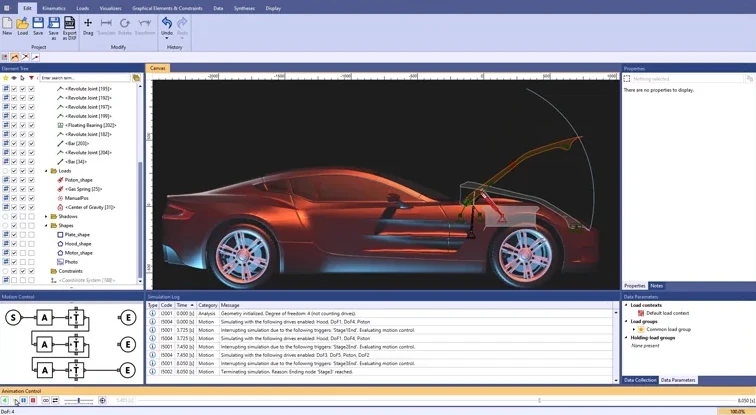
 2:11
Pedestrian protection on the front hood
A hood mechanism for normal opening and for pedestrian protection: ASOM runs both sequences in one model, and you examine each section individually.
A retractable door handle moves via an intermediate position to its end position. ASOM designs both linkages for this and calculates eight drive cases at once.
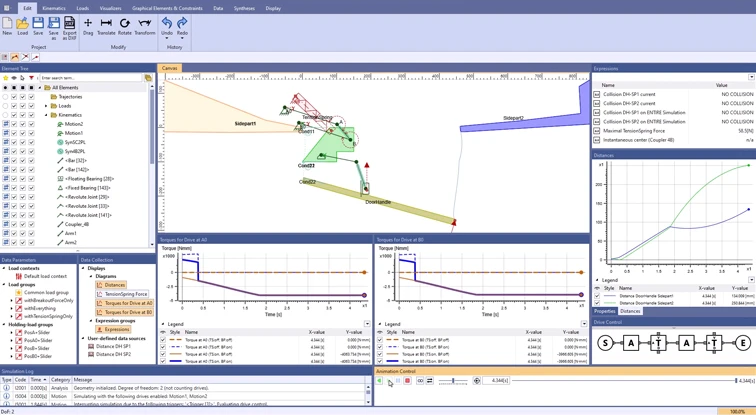 5:01
The mechanism consists of two subsystems: a four-bar linkage and a slider-crank attached to it. The start, intermediate and end positions of the handle are specified. At the same time, forces and torques matter – for different drives, with or without a spring – as well as mounting and collision conditions.
Instead of calculating each variant separately, you see all cases side by side and recognize which drive is suitable as early as the conceptual design stage.
The three positions of the handle are maintained while you optimize the mechanism. More on syntheses
With and without a spring, with and without breakaway force: all combinations are checked at once. More on force calculation
Mounting and collision conditions show early on whether the mechanism fits the available space. More on linkage design
2:11
A hood mechanism for normal opening and for pedestrian protection: ASOM runs both sequences in one model, and you examine each section individually.
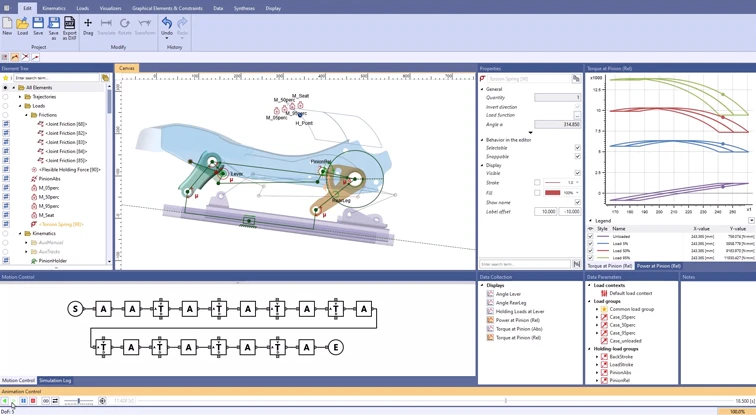 1:40
An electric motor moves the seat to all extreme positions. ASOM shows torque and power for different seat occupancies – and instantly reveals what difference a torsion spring makes.
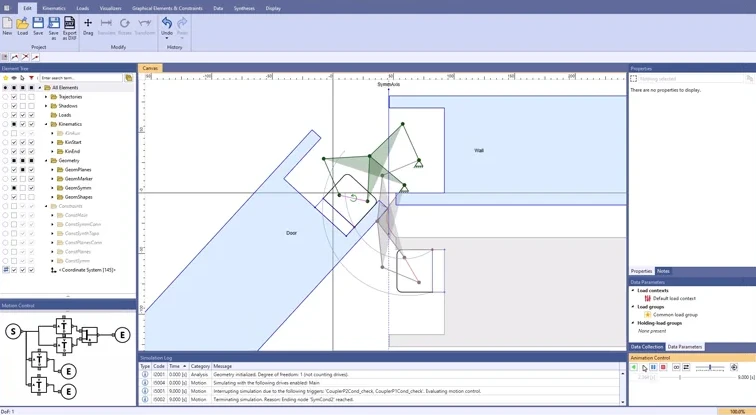 3:35
A six-bar linkage guides a door, with the joints arranged symmetrically. The synthesis is built from constraints alone, and the start and end positions remain adjustable.
Tell us about your mechanism. In an online demo, we will show you ASOM using your own example.