
 3:19
Two-point synthesis
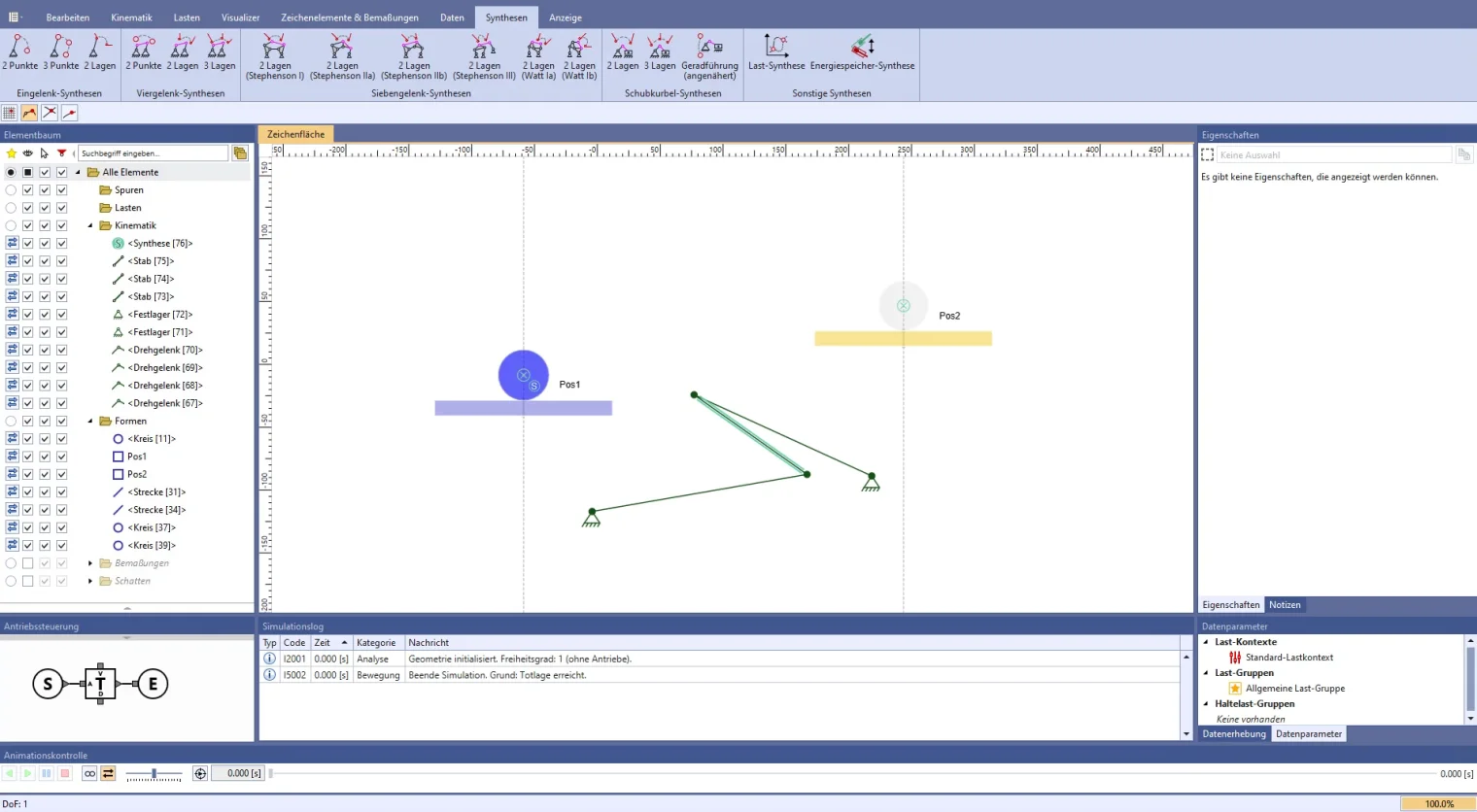
A four-bar linkage guides a ball from the start position to the end position. Move the end position, and the synthesis adapts the linkage in real time.
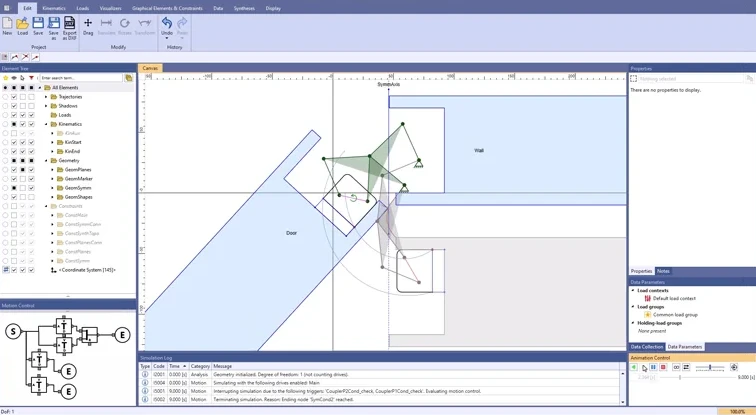
A Watt (Ia) six-bar linkage guides a door, with its joints arranged symmetrically. In ASOMv10, the synthesis for this is built from constraints alone.
 3:35
A Watt (Ia) six-bar linkage guides a door from a start position to an end position. In addition, the joints are to be arranged symmetrically about a vertical axis.
In addition to the start and end positions, you lock in further properties such as symmetry and see exactly whether the end position is reached.
Whether symmetry, distance or angle: the synthesis adheres to whatever you define as a constraint. More on constraints
If the door positions change, you adjust the requirements instead of starting over. More on syntheses
If a change misses the end position, you see it immediately and can make targeted corrections.
3:19
A four-bar linkage guides a ball from the start position to the end position. Move the end position, and the synthesis adapts the linkage in real time.
 4:43
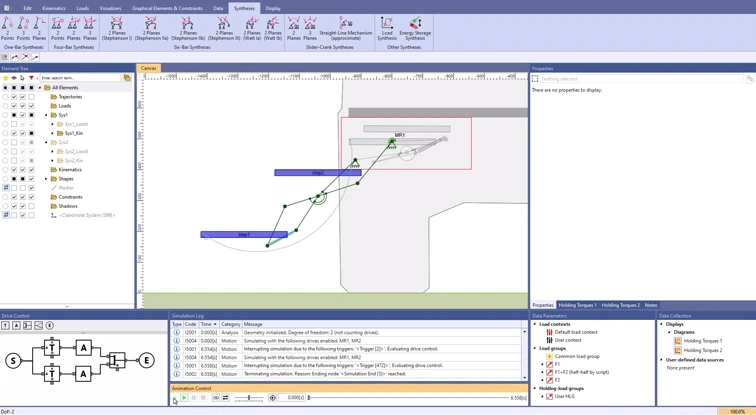
Two mechanisms for the same ladder: a scissor mechanism and a parallelogram linkage. ASOMv10 designs both by synthesis and compares the required torques.
 5:01
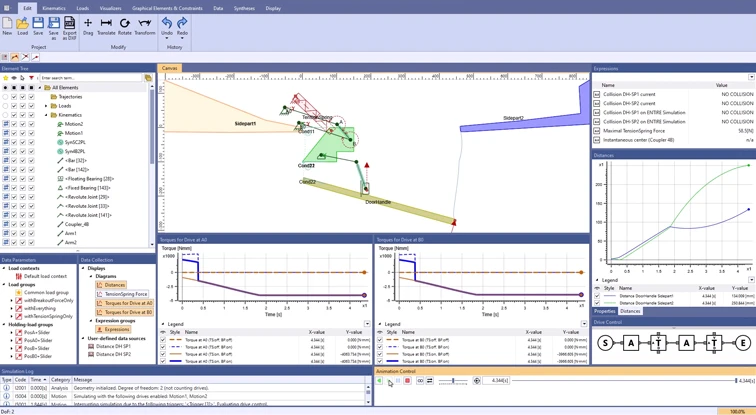
A retractable handle with three specified positions. Two syntheses hold them in place while you move bearings, and ASOMv10 calculates eight drive cases at once.
Describe your mechanism to us. In an online demo, we will show you ASOMv10 using your example.