
 3:35
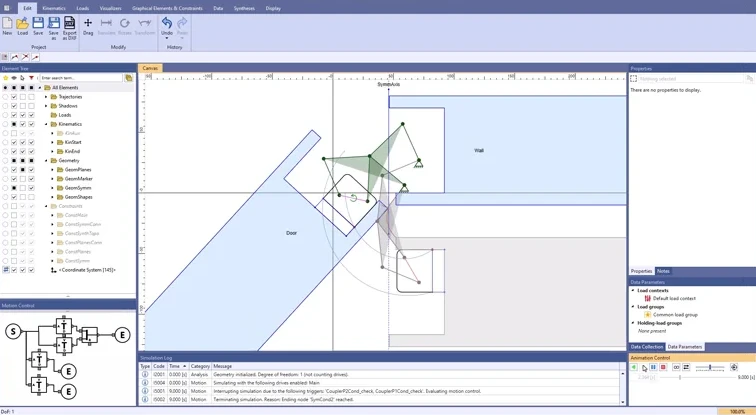
Symmetrical six-bar linkage for a door
A six-bar linkage guides a door, with the joints arranged symmetrically. The synthesis is built from constraints alone, and the start and end positions remain adjustable.
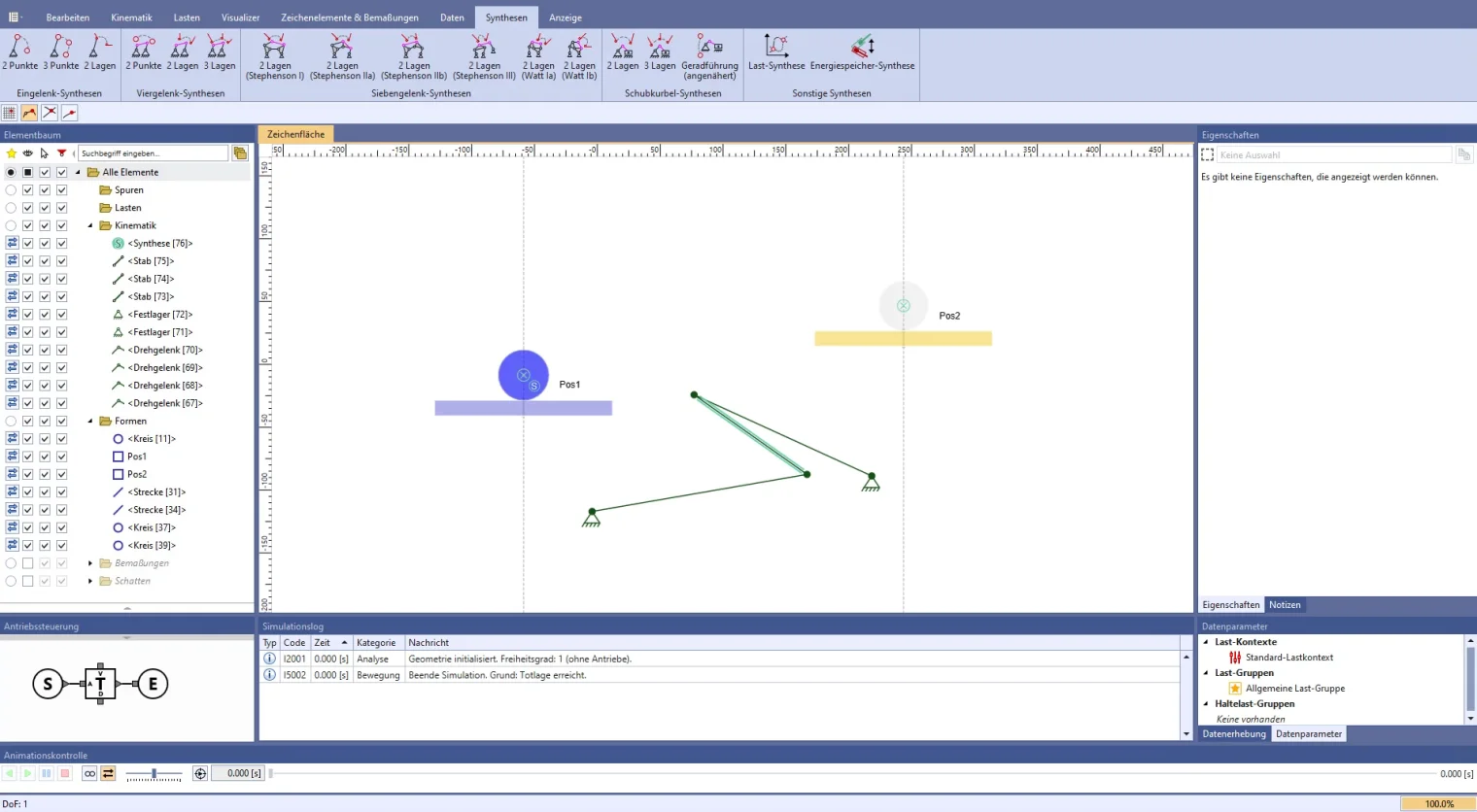
A four-bar linkage is to move a ball from a start position to an end position. With the two-point synthesis in ASOMv10, you find the right linkage in a targeted way.
 3:19
The coupler of a four-bar linkage is to move a ball from a desired start position to a second desired position. With a ball, only the position matters, not the angular orientation – two points are sufficient as requirements. The end position is then deliberately changed once more and the motion is adjusted further.
You define the start and end positions instead of trying out joint positions by hand, and you see every change in motion immediately.
Your requirements remain fulfilled while you continue to improve the path and motion. More on syntheses
If the end position changes, you continue working with the same linkage.
Element shadows and trajectories make the motion sequence immediately clear to your team as well. More on presentation
3:35
A six-bar linkage guides a door, with the joints arranged symmetrically. The synthesis is built from constraints alone, and the start and end positions remain adjustable.
 5:01
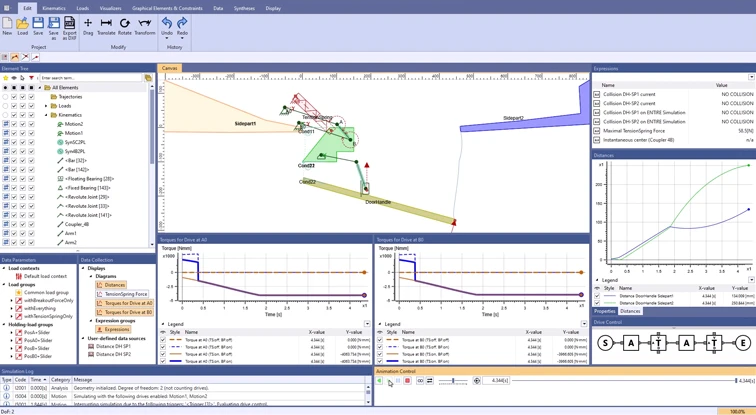
A retractable handle with three specified positions. Two syntheses hold them in place while you move bearings, and ASOMv10 calculates eight drive cases at once.
 4:43
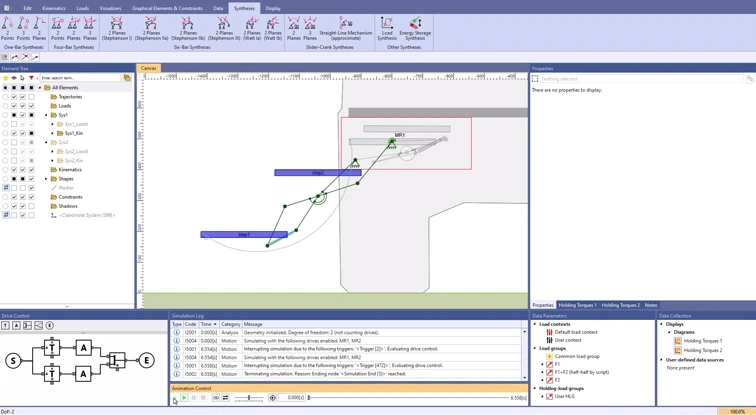
Two mechanisms for the same ladder: scissor kinematics and a parallelogram linkage. ASOMv10 designs both by synthesis and compares the required torques.
Describe your mechanism to us. In an online demo, we will show you ASOMv10 using your example.